


Crewel Embroidery
SN on 24th Apr 2021
Crewel work is a hand-embroidery technique traditionally done in Kashmir. It uses a hook (locally "Aari") for embroidery and is worked on a thick cotton "dusooti" fabric using wool or silk yarns, producing vibrant and colorful motifs. Crewel Fabrics are also made on linen, velvet, silk and jute backgrounds. Crewel fabrics are long lasting and known to last decades if cared for properly.
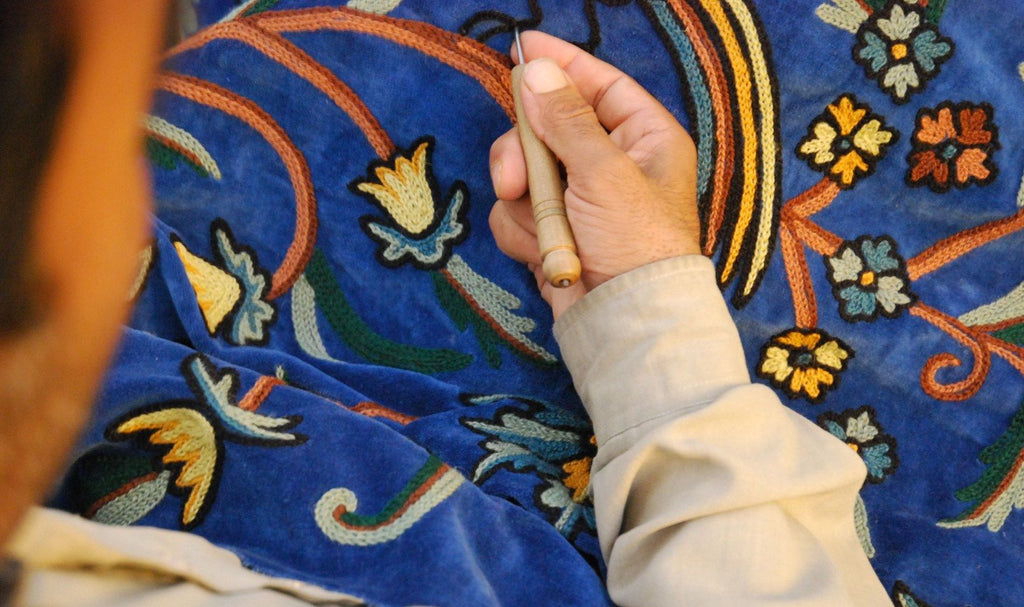
Crewel embroidery is of two types:
1-ply embroidery: A single ply wool yarn is used for this type of embroidery, the cost of the yarn is lower and results in a cheaper final product.
2-ply embroidery: It uses a 2-ply wool yarn for embroidery. The wool is almost twice as costlier as 1ply but produces a longer lasting and more durable product. The finer wool (with the smaller stitch size) gives these fabrics a more neat appearance in comparison to 1ply embroidered fabrics as illustrated below.

THE PROCESS: The crewel making process begins with the selection of a design - "Tree of Life", "Jacobean" and "Maple" are some of the most commonly used designs. Custom designs whether traditional, modern or geometric can be custom-made.
DESIGN: The designer initially makes a rough sketch on a 56" wide (or different width depending on the width of fabric to be printed) transparent paper long enough to accommodate at least one pattern repeat and wide enough to cover the entire width of the fabric. Once the process is finished, he will then punch holes following the design path, correcting any deviations using skill and experience to complete the design.

PRINTING: Once the pricked pattern (design) is ready, the paper is placed on an already laid out fabric and an ink soaked cloth/ yarn is passed over the design so that the ink seeps through the tiny holes in the pricked pattern making a nice and clean imprint on the fabric underneath (illustrated in the picture above).
The process is repeated by removing the paper and placing it just below the end of the earlier print for design continuity. The designer will continue this process till the entire length of fabric is printed. During this time the designer will soak the cloth with ink multiple times. A 33 yard length of fabric uses upto 200 grams worth of ink to print. After the process is complete, the fabric is rolled back full width to avoid any (not yet dried) ink from casting duplicate prints on the face of the fabric.

EMBROIDERY: The printed fabric goes to the craftsman for embroidery work next, where the design will slowly come to life. Over the next few weeks, colorful greens, blues and reds will give the fabric a rich, vibrant and lively feel.
The embroidery work is a gradual process and takes much of the time in fabric manufacture. For example, 20 yards of the "Tree of Life" fabric will usually take 10 to 12 weeks to complete. The video below shows a craftsman working on a heavy weight natural linen fabric (#FLR621).
WASHING: After the fabric has been embroidered fully, it will be sent to the washers for thorough cleaning. The fabric is dried in the open and takes one or two days to dry completely. Washing in the winters is particularly challenging as it can take longer to dry due to the wet and cold weather. The fabric is finally steam ironed for a nice crease-free finish making it ready to use for your next project!
CARE: Crewel Fabrics need proper care and handling. Washing is one of the biggest challenges for the fabric owners. Although we suggest a professional dry clean to avoid color bleeding, you can wash crewel fabrics at home in cold water using the lowest idle cycle in a washing machine. Again this is something you should test first with a smaller piece before committing the entire lot.
USES: Crewel fabric has endless uses in decor projects - Curtains, Blinds, Bedspreads, Throws, Runners, Seat covers, Pillowcases, Shams, Wall Hangings and others.
Select the perfect fabric for your Project from our Crewel collection!